
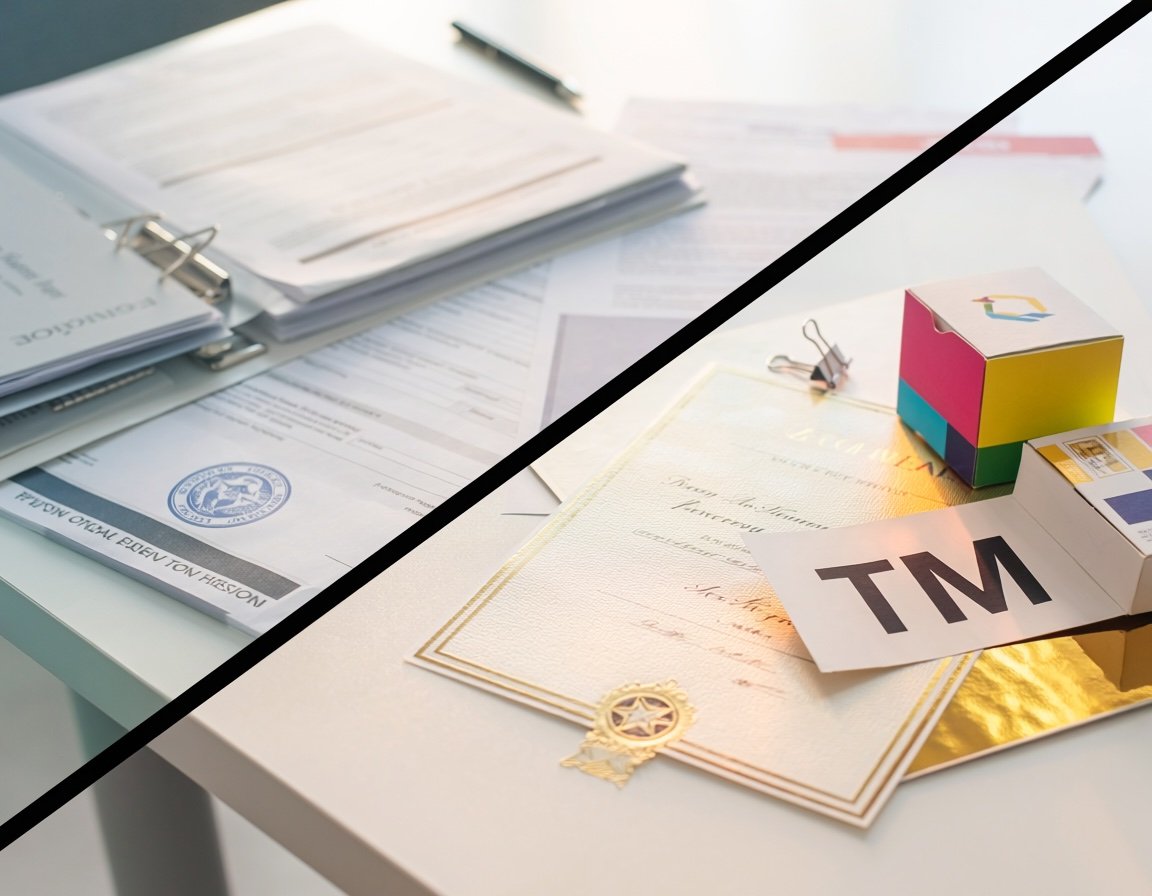
Business Names vs. Trademarks: What Actually Protects Your Brand in Florida
You registered your business name with the state. Great. But that doesn’t mean you own it.
I see this confusion constantly. Business owners think that because they filed their LLC or corporation with the Florida Division of Corporations, their business name is legally protected. That’s not how this works. What you registered during entity formation is your legal entity name. The name under which your business exists as a legal structure. It’s required. It’s official. But it doesn’t give you trademark rights, and it doesn’t stop someone else from using a confusingly similar name in commerce.
Let me break down what business name registration in Florida actually means, what it doesn’t cover, and how trademarks create the protection most business owners think they already have.
What Happens When You Register a Business Entity Name in Florida
When you form an LLC, corporation, or limited partnership in Florida, you file with the Division of Corporations through Sunbiz.org. Part of that process requires you to choose a business entity name. That name gets entered into the Florida Division of Corporations database. It’s your legal name for tax filings, contracts, banking, and official state records.
Here’s what that registration does: it prevents another entity from registering the exact same name in the same entity type in Florida. That’s it. It’s an administrative function. It’s not intellectual property protection.
Your entity name registration does not:
- Give you trademark rights
- Prevent others from using similar names in marketing or commerce
- Stop businesses in other states from using your name
- Create any enforceable brand ownership
- Protect you from infringing on someone else’s existing trademark
That last point is critical. Just because the state allowed you to register your business name doesn’t mean you have the legal right to use it. The Division of Corporations doesn’t check for trademark conflicts. If your chosen business name infringes on an existing trademark, you can be sued, forced to rebrand, and liable for damages, even though Florida accepted your filing.
Fictitious Names and DBAs in Florida
Now let’s talk about fictitious names, commonly called DBAs, “doing business as” names. In Florida, if you want to operate under a name that’s different from your legal entity name, you must register a fictitious name under Florida Statute § 865.09.
For example, if your LLC is named Sunshine Consulting Services LLC, but you want to market your business as “The Growth Lab,” you file a fictitious name registration for The Growth Lab. This is true even even when wanting to due business and market the business as “Sunshine Consulting Services” sans LLC. You file with the Florida Division of Corporations, and it gets added to the public record.
Here’s what a fictitious name filing does: it creates public notice that your entity is operating under another name. It’s a transparency measure. It allows consumers and creditors to identify who’s behind a business name.
Here’s what it doesn’t do: provide any trademark protection whatsoever.
A DBA registration is even weaker than your entity name registration. It doesn’t prevent others from using the same or similar fictitious names. It doesn’t give you brand rights. It doesn’t stop infringement. And just like with your entity name, filing a fictitious name doesn’t mean you have the legal right to use it. You can still be infringing on someone else’s trademark, and the state won’t warn you.
I’ve seen businesses invest thousands into branding, signage, and marketing under a DBA, only to receive a cease-and-desist letter because they unknowingly infringed on an existing federal trademark. The DBA gave them nothing. No defense. No protection. Just a false sense of security.
Florida State Trademark Registration Through Sunbiz
Florida does offer state-level trademark registration through the Division of Corporations. You can file a trademark application on Sunbiz.org, and if approved, your mark gets registered at the state level under Florida Statute § 495.011.
A Florida state trademark provides some level of protection, but only within Florida, and only to the extent that it doesn’t conflict with existing federal trademarks or common law rights. The state doesn’t conduct a comprehensive search for conflicting marks. The state doesn’t check the federal trademark database. The due diligence is entirely on you.
If you register a state trademark without doing a proper clearance search, and it turns out your mark infringes on a federal trademark, the state registration won’t protect you. Federal trademarks trump state trademarks every time.
State trademark registration can be useful in limited circumstances. If you’re a small, hyper-local business with no plans to expand beyond Florida and no online presence, a state trademark might provide adequate protection at a lower cost. But for most businesses, especially those operating online, selling across state lines, or planning to scale, a state trademark is insufficient.
Common Law Trademark Rights: What You Earn Through Use
Even without formal registration, you can establish trademark rights through actual use in commerce. These are called common law trademark rights. If you’re the first to use a distinctive mark in connection with specific goods or services in a specific geographic area, you may have enforceable rights in that area.
Common law rights are real. They’re recognized by courts. But they’re also limited, difficult to prove, and geographically constrained. You’d need to demonstrate continuous use, consumer recognition, and priority of use. That’s not easy to do without documentation, and it’s even harder to enforce against a federally registered trademark.
If someone with a federal trademark registration starts using your mark, your common law rights are generally going to lose. Federal registration creates a legal presumption of ownership and nationwide priority. Common law rights are reactive, defensive, and weak by comparison.
I wouldn’t rely on common law trademark protection for my business. And I don’t recommend that my clients do either. It’s the legal equivalent of driving without insurance, you might be fine until you’re not.
Federal Trademark Registration: The Only Real Protection
A federal trademark registered with the United States Patent and Trademark Office (USPTO) is the gold standard. It’s the only form of intellectual property protection that gives you:
- Nationwide rights, even in states where you haven’t done business yet
- Legal presumption of ownership and exclusive use
- The ability to sue in federal court for infringement
- Public notice that discourages others from adopting similar marks
- The right to use the ® symbol, signaling registered trademark status
- Eligibility to record your trademark with U.S. Customs to stop counterfeit goods at the border
- An asset you can license, franchise, or sell
Federal trademark protection is not automatic. It requires filing an application with the USPTO, passing examination, and in some cases, proving use in interstate commerce. The process can take months. It costs money. But it creates something you actually own, a legally enforceable property right in your brand.
This is what most business owners think they’re getting when they register their LLC. They’re not. A federal trademark is a separate filing, a separate process, and a separate type of legal protection.
If your brand has value, if you’re building something you plan to scale, protect, and leverage, you need a federal trademark. A business entity name registration is not a substitute. A DBA is not a substitute. A Florida state trademark is not a substitute.
Why This Matters for Florida Business Owners
Florida is a business-friendly state. We have no personal income tax. We have relatively simple entity formation processes. Entrepreneurs move here, start businesses, and assume that because the state accepted their paperwork, they’re legally protected. That assumption is expensive.
I’ve worked with business owners who’ve had to rebrand entirely because they didn’t secure trademark protection early. I’ve seen cases where a business built a reputation locally, only to find out a competitor in another state had federal trademark rights and could force them to stop using their own name. I’ve reviewed cease-and-desist letters sent to Florida businesses that had valid state entity registrations but were infringing on federal trademarks.
None of this is theoretical. It happens. And when it does, the business that didn’t secure proper trademark protection loses, regardless of how long they’ve been in business, how much they’ve invested in branding, or whether they registered their entity name with the state.
Here’s the process I recommend for Florida business owners:
- Before you file your entity formation documents, conduct a trademark clearance search
- Check the USPTO database for conflicting federal trademarks
- Check common law use through internet searches, business directories, and domain registrations
- If the name is clear, file your entity formation documents with the Division of Corporations
- Immediately begin the federal trademark application process
- If you’re using a DBA or fictitious name, apply the same clearance and trademark process to that name
This approach isn’t overcautious. It’s standard intellectual property practice. Trademark law exists to prevent consumer confusion and protect brand investment. If you’re serious about your business, treat your brand like the asset it is.
The Bottom Line on Business Name Registration vs. Trademark Protection
Registering your business entity name with the Florida Division of Corporations is a necessary administrative step. It’s not brand protection. Filing a fictitious name or DBA creates public transparency. It doesn’t create trademark rights. Even a Florida state trademark provides only limited, state-level protection and doesn’t prevent conflicts with federal marks or common law rights.
Federal trademark registration is the only way to truly own and protect your brand at a national level. It’s the only registration that gives you enforceable rights, legal presumptions, and the ability to stop others from using confusingly similar marks in commerce.
If you’re building a business, invest in protecting it properly from the start. The cost of a federal trademark application is a fraction of the cost of rebranding, litigation, or losing your business name entirely.
Frequently Asked Questions
Does registering my LLC in Florida protect my business name as a trademark?
No. Registering your LLC with the Florida Division of Corporations only prevents other entities from registering the exact same name in the same entity type in Florida. It does not provide trademark protection, and it does not prevent others from using similar names in marketing or commerce.
What is the difference between a business entity name and a fictitious name in Florida?
Your business entity name is the legal name you choose when you form your LLC, corporation, or other entity with the state. A fictitious name, or DBA, is an additional name you register if you want to operate under a different name than your legal entity name. Both are registered with the Florida Division of Corporations, but neither provides trademark protection.
Can I register a trademark in Florida instead of with the federal government?
Yes, Florida offers state-level trademark registration through the Division of Corporations under Florida Statute § 495.011. However, state trademarks only provide protection within Florida, do not check for conflicts with federal trademarks, and are inferior to federal trademark rights. For most businesses, federal trademark registration with the USPTO is the stronger and more comprehensive option.
What are common law trademark rights?
Common law trademark rights are established through actual use of a mark in commerce, even without formal registration. If you are the first to use a distinctive mark in connection with specific goods or services in a specific geographic area, you may have enforceable rights in that area. However, common law rights are limited, difficult to prove, and generally weaker than federal trademark registration.
Do I need a trademark if I only do business in Florida?
Even if you currently operate only in Florida, a federal trademark provides nationwide protection and prevents others from using your mark in other states or online. If you have any online presence, sell products that could cross state lines, or plan to expand in the future, federal trademark protection is essential. A business entity name or state trademark will not provide adequate protection.
The information provided in this article is for general informational and educational purposes only and does not constitute legal advice. Reading this content does not create an attorney-client relationship between you and Lamar Legal PLLC or Attorney Alanna Lamar. Every legal situation is unique and laws vary by jurisdiction. Nothing in this article should be relied upon as a substitute for professional legal counsel. If you have questions about your specific situation, please consult a licensed attorney in your area. Schedule a consultation with Lamar Legal PLLC, or learn more at lamarlegal.com.