
Florida Slip & Fall Lawyer
Injured on Someone Else’s Property? Property Owners Have a Legal Duty — We Hold Them to It.
Florida Slip & Fall Lawyer
Injured on Someone Else’s Property? Property Owners Have a Legal Duty — We Hold Them to It.
A slip and fall or trip and fall accident can cause serious injuries — broken bones, head injuries, back and spine damage — in an instant. And yet, premises liability cases are among the most aggressively contested by insurance companies, who routinely argue that the victim was careless rather than the property owner.
Florida law imposes a duty on property owners to maintain reasonably safe conditions for visitors. When they fail that duty and someone is hurt as a result, they are legally responsible. Lamar Legal represents slip and fall and premises liability victims throughout Florida and builds the evidence-based cases that prove what happened — and who is responsible.
Types of Premises Liability Cases We Handle
Wet floors — spills, mopped surfaces, or leaks without adequate warning signs
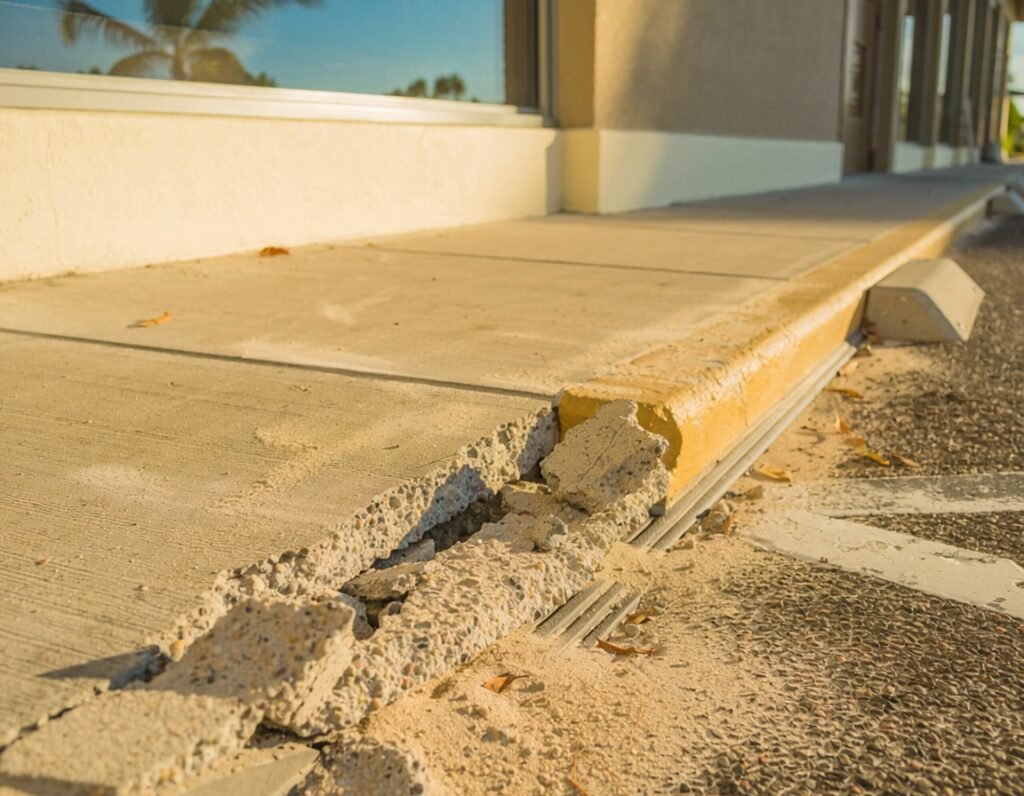
Uneven flooring, broken pavement, or cracked sidewalks and parking lots
Inadequate lighting — dark stairwells, parking lots, or hallways leading to falls or criminal attacks
Negligent security — failure to provide adequate security in high-crime areas leading to assault or robbery
Staircase defects — broken handrails, uneven steps, or missing non-slip surfaces
Swimming pool accidents — failure to maintain fencing, supervision, or safe conditions
Dog bites and animal attacks on property
Retail and grocery store accidents — the most common setting for slip and fall claims in Florida
Hotel and resort accidents — Florida’s tourism industry creates significant premises liability exposure
What to Do Immediately After Slip & Fall
Evidence in a premises liability case can disappear within hours. Acting quickly protects your ability to recover compensation.
-
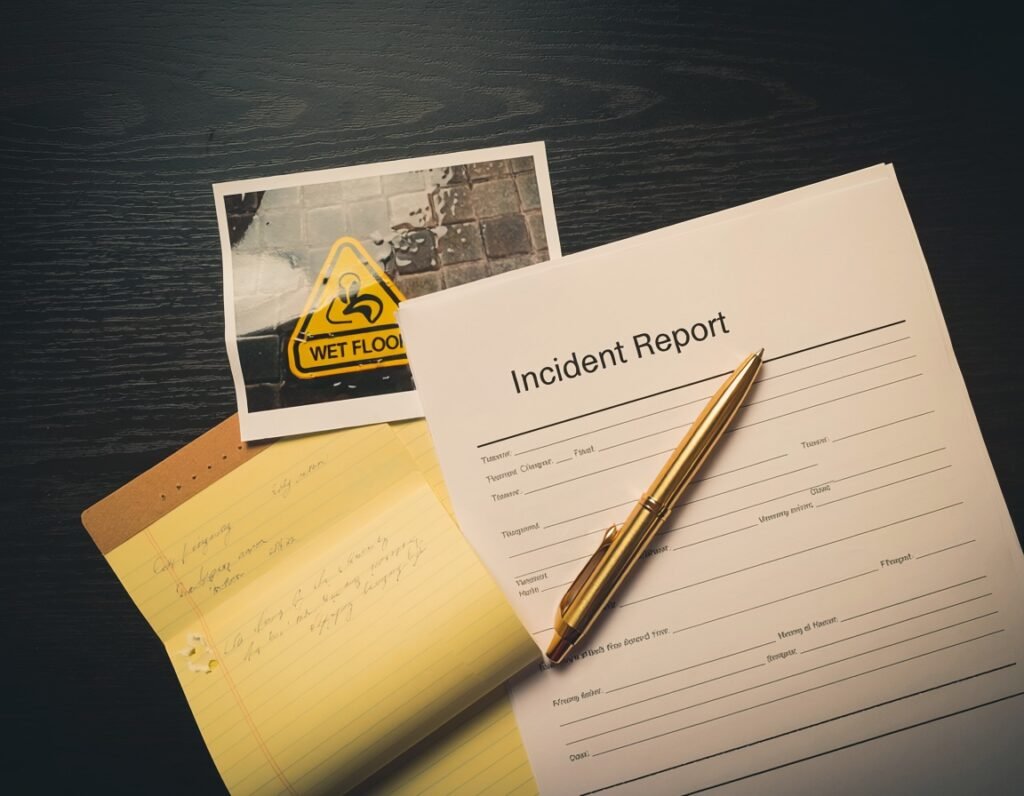
Report the accident to the property owner or manager immediately and get a copy of the incident report
-
Photograph the exact location — the hazard, the floor, the lighting, the signage (or lack of it) — before you leave if you are able
-
Get the names and contact information of witnesses
-
Seek medical attention the same day — delayed treatment gives insurers grounds to argue your injuries are not serious
-
Preserve the shoes and clothing you were wearing — they can be relevant to fault analysis
-
Do not post about the accident on social media
-
Do not give recorded statements to the property owner’s insurance company
-
Contact a slip and fall attorney as quickly as possible — we send preservation letters to prevent evidence destruction
How We Build Your Premises Liability Case
- We send evidence preservation letters to the property owner immediately, requiring them to preserve surveillance footage, maintenance records, and incident reports
- We obtain the incident report and any prior complaint records about the same hazard
- We investigate the property: photographs, measurements, lighting conditions, and warning signage
- We identify the correct property owner, manager, and insurer — commercial properties often involve multiple parties
- We consult safety experts and engineers when the hazard involves building code or industry standard violations
- We document your injuries, treatment, and the impact on your ability to work and function
- We build a case that directly addresses the defenses insurers use — contributory negligence, open and obvious hazard, and assumption of risk
Compensation You May Recover
Premises liability victims in Florida may recover both economic and non-economic damages. The value of your case depends on injury severity, the clarity of the property owner’s negligence, and the long-term impact on your life.
- Emergency medical treatment, surgery, and hospitalization
- Physical therapy, rehabilitation, and ongoing care costs
- Lost wages and loss of future earning capacity
- Pain and suffering — physical and emotional
- Permanent injury, disability, or disfigurement
- Loss of enjoyment of life
- In cases involving criminal assault due to negligent security: all damages related to the attack
Every case is different. The value of a personal injury claim depends on injury severity, liability clarity, available insurance, and long-term impact. We evaluate your specific situation during your free case evaluation.
How the Case Process Works
Premises liability cases follow the same general personal injury process — but with specific early steps that are especially important in this practice area.
Stage 1 – Free Case Evaluation
We review the accident circumstances, the property involved, and your injuries. No cost, no obligation.
Stage 2 – Evidence Preservation
We immediately send preservation letters demanding the property owner retain surveillance footage, maintenance logs, and inspection records. This step is time-critical — footage is often overwritten within 30–90 days.
Stage 3 – Investigation
We photograph the scene, obtain the incident report, interview witnesses, and — where relevant — hire safety experts to evaluate whether the property met applicable standards.
Stage 4 – Medical Documentation and Case Building
We document your injuries and treatment, gather expert opinions on permanent injuries, and build the liability and damages case simultaneously.
Stage 5 – Demand, Negotiation, and Resolution
We present a comprehensive demand to the property owner’s insurer. If they refuse fair value, we file suit and litigate.
Most personal injury cases settle without going to trial. We prepare every case as if it will go to trial — because that preparation is what produces the best settlements.
Frequently Asked
Questions – Florida Slip & Fall Lawyer
-
What do I have to prove in a Florida slip and fall case?
Q: What do I have to prove in a Florida slip and fall case?
A: To recover in a Florida premises liability case, you must establish that: (1) the property owner owed you a duty of care as an invitee, licensee, or in some cases a trespasser; (2) the owner knew or should have known about the dangerous condition; (3) the owner failed to fix it or warn you; and (4) the hazard caused your injuries. Florida tort reform shifted the burden to plaintiffs to prove actual or constructive notice of the hazard, which makes documentation and early evidence gathering especially important.
-
What if the property owner says I should have seen the hazard?
Q: What if the property owner says I should have seen the hazard?
A: This is the ‘open and obvious’ defense — one of the most common arguments used by property owners and their insurers. In Florida, the open and obvious nature of a hazard does not automatically absolve the owner of responsibility. Courts consider whether the owner should have anticipated that someone might be injured despite the hazard being visible. We address this defense directly and build the case to counter it with evidence of inadequate warning, poor lighting, or foreseeability.
-
Does Florida’s modified comparative negligence rule apply to slip and fall cases?
Q: Does Florida’s modified comparative negligence rule apply to slip and fall cases?
A: Yes. Florida’s modified comparative negligence rule applies in premises liability cases just as in other personal injury matters. If you are found more than 50% at fault, you cannot recover. If you are 50% or less at fault, your recovery is reduced proportionally. This is why insurance companies aggressively argue contributory fault — it is a direct way to reduce or eliminate your claim. Our job is to present the evidence that minimizes your assigned fault.
-
How long do I have to file a slip and fall claim in Florida?
Q: How long do I have to file a slip and fall claim in Florida?
A: The statute of limitations for premises liability claims in Florida is 2 years from the date of the accident. However, the practical deadline is much earlier — surveillance footage and other critical evidence disappears within weeks. We recommend contacting an attorney as soon as possible after your accident, ideally within days.
-
What if I was injured in a store, hotel, or restaurant?
Q: What if I was injured in a store, hotel, or restaurant?
A: Commercial properties — retail stores, grocery stores, hotels, restaurants, and entertainment venues — carry premises liability insurance for exactly these situations. Large commercial property owners often have experienced claims adjusters and defense counsel who move quickly to build their side of the case. Early representation levels the playing field and ensures your rights are protected from the start.
Speak With a Florida Personal Injury Lawyer Today
Evidence fades quickly after accidents. Surveillance footage is deleted. Witnesses’ memories fade. Insurance companies move immediately to minimize claims.
Early legal guidance strengthens your position and protects your rights.
Don’t navigate this complex process alone. Schedule a free case evaluation to understand your rights, options, and potential compensation.
Get Your Free Case Evaluation →
Or Call Now
(888) 402-4LAW
Available 24 hours a day, 7 days a week
Same-day consultations available